· Marcus Reed
What a Bike Frame Bag Gains You on Every Ride
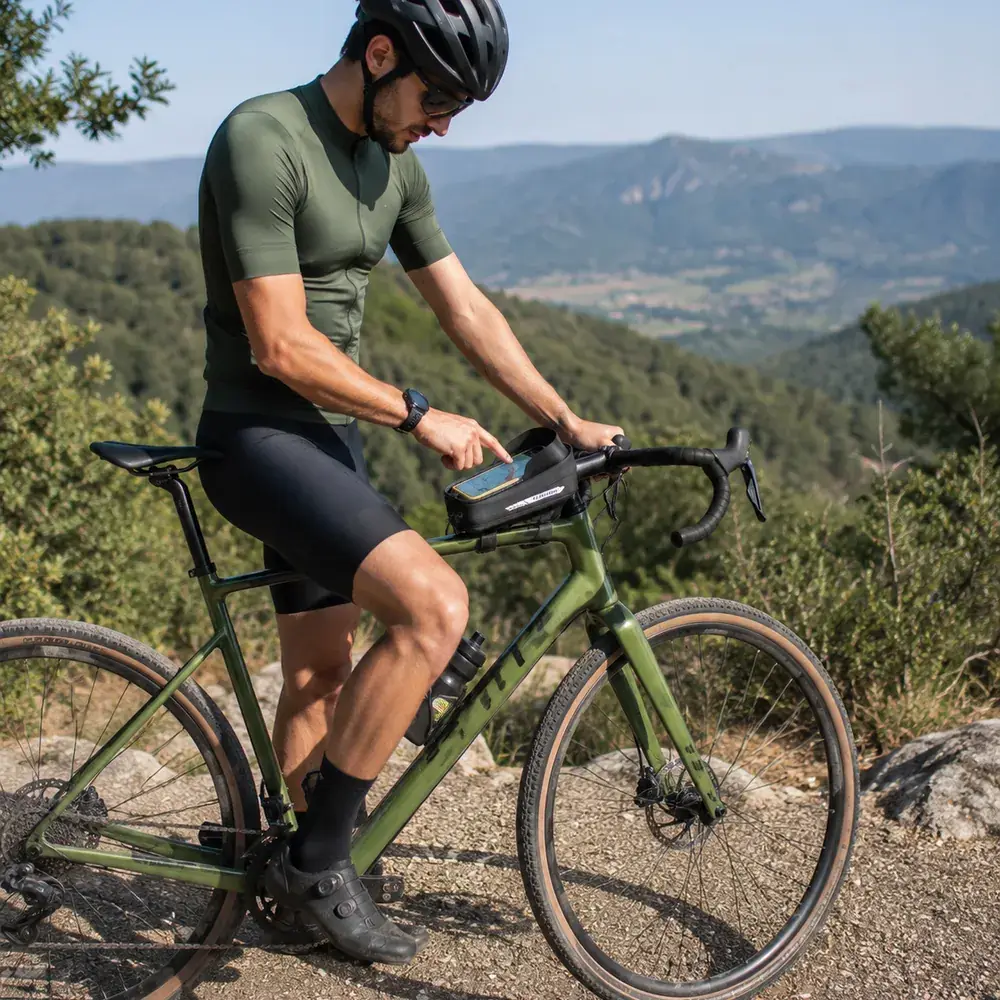
Some frame bags deserve the hype, and some are a waste of $30. This article gives you the real gains, the two or three things worth checking on your own bike, and a clear verdict instead of a shrug.
What a frame bag actually does
The idea is simple, and that simplicity is why it works. Your frame's main triangle is dead space on most bikes. A frame bag turns that space into storage without hanging anything off your shoulders or your rear axle. The Ridgeline Trail is exactly that: a lightweight Oxford/nylon triangle bag that fits road, MTB and gravel bikes, held on with two straps on the top tube and one on the down tube. It sounds humble because it is. But humble gear that just works is exactly what you want when you are 20 miles out and need a tube.
Americans ride a bike each year — most of them carrying essentials somehow
— Outdoor Industry Association, 2023
That is a huge base of riders, and almost every one of them faces the same small problem: where do the tube, the multitool, the pump and the snacks go? The three usual answers are a jersey pocket, a backpack or a bag on the bike. Frame bags win that comparison, and the rest of this piece shows you exactly why.
The pros
Here is where a frame bag genuinely earns its place.
- Stable handling. This is the big one, and it is physics, not a claim. Load carried inside the triangle sits close to the bike's balance point, so your center of gravity stays low and the bike turns and brakes the way you expect. A backpack sits high and shifts weight onto your shoulders; a rear rack adds sway behind the rear axle. The frame bag beats both for balance.
- Your back stays free. On a long or hot ride, a loaded backpack is a sweaty, tiring mistake. Moving that weight onto the bike is a quiet upgrade you feel most on the climbs.
- Fast access. The bag is right there under your hand. No dismounting, no shrugging off a pack — just reach down for your snack or your multitool.
- It fits almost any bike. Velcro straps adapt to road, gravel and MTB frames. A verified buyer put it plainly: the bag "fits perfectly on the bike." Another said it "sits snug in the frame and doesn't rattle on rough ground."
- Cheap for what it does. At $29.95 the Trail costs less than a single dinner out and lasts seasons. That is a rare value equation in cycling, where accessories routinely run into three figures.
What to check on your own bike
Two minutes with your own bike is all it takes to order the right bag first time. Here is the short checklist.
- Match the bag to the load. A frame bag is built for essentials: tube, tools, pump, snacks, phone, keys. Hauling a laptop and a change of clothes every day is a rack job, and the Trail then rides alongside it as your permanent tool kit.
- Check your bottle clearance. On smaller frames the triangle is tighter, so hold the bag against the frame and see where the cage sits. The Trail is cut compact for exactly this reason and leaves cages usable on most adult frames.
- Pick the right shell for your weather. The Trail uses water-resistant Oxford/nylon that shrugs off spray and light rain. Riding with your phone out in real downpours? The hard-shell Ridgeline Pilot is the sealed answer, and the two mount together.
- Measure your triangle. E-bikes and full-suspension frames with shock linkage run tighter, so take the tape to your open space first. The velcro straps adjust to any tube diameter, and on a tight triangle the Trail simply rides higher in the corner.
- Decide where you want the weight. Short rides with nothing but keys and a phone? The Ridgeline Wedge at $19.95 hides the repair kit under the saddle and stays on the bike permanently.
Who benefits most
Let me get specific, because "most riders" is vague and you want to know if you are one of them.
- Gravel and long-distance riders. You are out far enough that a mechanical means carrying your own tools. A frame bag holds a tube, multitool and pump without a pack. This is the clearest yes.
- Commuters. You want keys, a phone and a small repair kit on the bike, not on your back in work clothes. If phone navigation matters, pair the Trail with the waterproof Pilot top tube bag so your screen stays dry and glanceable.
- Mountain bikers. A snug, quiet bag that does not rattle over roots is worth a lot on the trail. Our MTB frame bag guide covers trail-specific fit.
- Bikepackers. The frame bag is a core part of a multi-day loadout. See the bikepacking frame bag guide for how it fits into a bigger system, and the full frame bag page if you want maximum triangle capacity.
- Wet-weather riders. If rain is your normal, prioritize a waterproof setup — start with the waterproof frame bag breakdown.
Which Ridgeline bag fits your riding
Every rider on that list has an answer here. It is just a question of which bag.
If you ride short loops and carry nothing but a phone, the Wedge at $19.95 is the one to buy: the repair kit lives under the saddle and you never think about it again. If you commute with a laptop and a change of clothes, keep the rack for the bulk and let the Trail carry the tools, or run the Roll up front at $29.95 so your wallet, keys and phone come off the bike with you. And if your frame is small or packed with a suspension shock, measure the open triangle, mount the Trail high in the corner, and add the Pilot on the top tube for your phone. Measure first, then order the right one.
Frame bag vs. the alternatives
The fastest way to judge "worth it" is to compare a frame bag against the things people use instead. Here is how they stack up for carrying ride essentials.
| Option | Weight placement | Capacity | Comfort | Best for |
|---|---|---|---|---|
| Frame bag | Low, centered in triangle | Essentials | High — nothing on your body | Most riders, most rides |
| Backpack | High, on shoulders | Large | Low on long/hot rides | Big hauls, short trips |
| Rear rack / panniers | Behind rear axle | Very large | Adds sway | Touring, groceries, commuting cargo |
| Jersey pocket | On your back | Tiny | Fine for a phone/keys | Short, light rides |
Read across that table and the pattern is clear: for carrying ride essentials without wrecking your handling or your back, the frame bag wins for the widest range of riders. The alternatives are not wrong — they are just built for different jobs. A rack is better for cargo; a jersey pocket is better for nothing but a phone. The frame bag owns the middle, which is where most people ride.
What real buyers say
Here is what verified buyers reported.
On the frame bag itself, riders were consistent about fit and build. One wrote, "Good material, fits perfectly on the bike. Recommended seller." Another said it was a "great bike bag — good looking, well made and affordable. Perfect for carrying tools and essentials." A third confirmed the capacity holds up in practice: "As described, quality is good. Fast shipping, plenty of room for a tube, multitool and snacks." And on the rattle question that makes or breaks a frame bag on rough ground, one buyer was blunt: "Excellent quality! Sits snug in the frame and doesn't rattle on rough ground."
For phone navigation, the Pilot drew the same consistent feedback. One rider was delighted the touchscreen window "even reads my fingerprint to unlock the phone," a wet-weather commuter confirmed "the phone stays dry," and a third called it "highly recommended. Good price, very functional, easy to install." You can read more of these on the reviews page.
What $29.95 covers
Value is not just the sticker price; it is the price against the risk. Because every Ridgeline order includes free shipping, arrives in 6–10 business days, and comes with a 30-day money-back guarantee through secure Stripe checkout, the answer to "what if I don't like it" is: return it. That is the whole reason I feel comfortable telling most riders it is worth it. You are not gambling $30 on a hunch — you are trying it with a safety net. If you want both bags, the Complete Kit pairs the Trail and Pilot for $44.95 (was $74.90), cheaper than buying them apart.
The verdict
So, what does a frame bag give you? For the large majority of riders, a real gain on every ride: the physics is on your side (weight low and centered beats weight high on your back), the verified feedback is consistent, and the price-plus-guarantee combination makes trying one nearly risk-free. The Ridgeline Trail at $29.95 is the easy recommendation, and if your rides are short the Wedge at $19.95 does the same job under the saddle. Add the waterproof Pilot if you navigate by phone, and note that with e-bikes among the fastest-growing categories in US cycling — outselling electric cars in unit sales (LEVA, 2023) — more riders than ever are looking to carry smarter. For deeper comparisons, our road bike frame bag guide and the rest of the blog go further.

Marcus Reed · Gear Editor at Ridgeline
Marcus writes Ridgeline's guides to frame bags, bikepacking setups and carrying gear on the bike.